

























 Canada
 Latin America (English)
 Latin America (Espanol)
 USA
USA
 China
China
 India
India
 Japan
Japan
 Republic of Korea
 South East Asia (English)
 Austria
 Belgium
 France
 Germany
 Italy
Italy
 Netherlands
 Others
 Spain
Spain
 Switzerland
 Turkey
 UK
UK
 Africa (english)
 Africa (français)
 Middle East (english)
 Australia
 New Zealand


Six Effective Airflow Management Measures in Data Center Cabinets
Data centers are facing increased pressure to improve energy efficiency and sustainability as global energy costs rise and regulations tighten. By 2027, 75% of organizations are expected to have implemented data center infrastructure sustainability programs, up from less than 5% in 2022. The industry is navigating challenges of digital growth, which elevates energy consumption, within a framework of stringent standards and regulations. Effective airflow management and compliance with emerging regulations are essential for reducing environmental impact and achieving energy-efficient operations.
Navigating Industry Challenges
As data centers navigate unprecedented digital growth, the resulting surge in internet users has led to increased workloads and energy consumption. With data centers often likened to the factories of the 21st century, they now encounter scrutiny akin to traditional manufacturing facilities regarding their environmental footprint. Consequently, local governments are stepping up regulations to ensure a delicate balance between digital expansion and achieving net-zero objectives.
Meeting Standards and Regulations
The data center industry operates within a framework of standards and regulations designed to promote energy efficiency and sustainability. Notable among these are the EU Code of Conduct on Data Center Energy Efficiency, the EN50600 European Standard for Data Center Infrastructure, and the international ISO/IEC 22237 standard. The recently updated EU Energy Efficiency Directive, effective from 2024, mandates rigorous reporting on energy performance for data centers within the EU, covering various aspects such as energy consumption, renewable energy usage, and storage and network traffic.
Regulations vary from country to country, but what is currently a general recommendation is expected to become mandatory in the near future. For example, Germany has already mandated that all data centers that start operations on or after July 1, 2026, must have a Power Usage Effectiveness (PUE) of 1.2 or lower. Existing data centers that start or have started operations before this date must also meet stricter standards, aiming for a PUE of 1.5 or lower as of July 1, 2027, and further reducing it to 1.3 or lower as of July 1, 2030. These requirements, along with many others, have been defined in Germany’s new Energy Efficiency Act, which serves to implement requirements under the draft EU Energy Efficiency Directive.
Simply put, there is an increasing industry consensus that despite voluntary efforts by data center organizations, both individually and collectively, compliance with energy efficiency and sustainability regulations at local, regional, and possibly global levels will soon be necessary. Therefore, it makes sense to proactively pursue energy efficiency initiatives rather than scrambling to comply with legal environmental mandates at the last minute.
Addressing Airflow Management Challenges
McKinsey and Company estimate that 40% of a data center's total energy is consumed by cooling. It highlights the necessity of adopting efficient cooling practices to enhance energy efficiency and reduce energy consumption. Among the most economical strategies is implementing efficient airflow management, crucial for optimizing data center energy efficiency. Challenges such as by-pass and re-circulation airflow contribute to energy wastage and reduced efficiency. Mitigating these challenges requires preventing the mixing of hot and cold airflows at the cabinet level.
Six Critical Airflow Management Measures
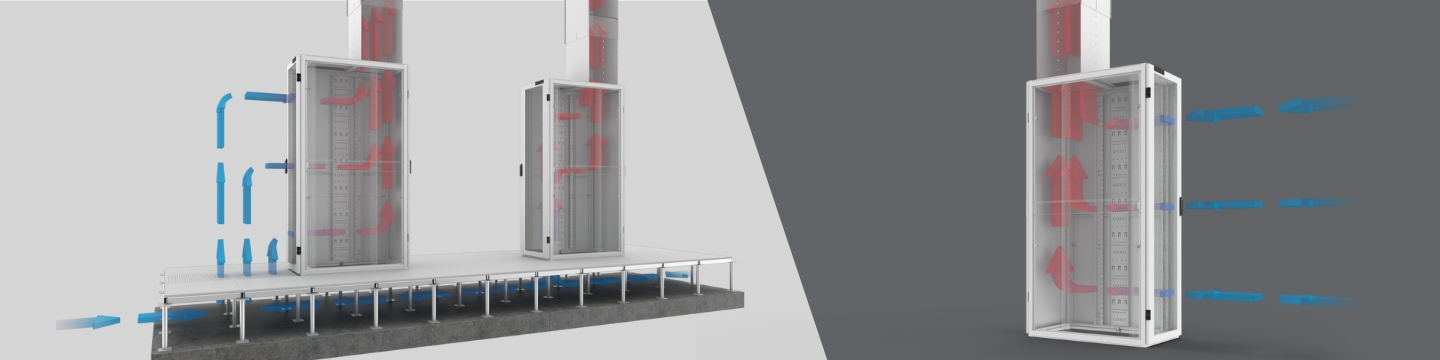
To enhance efficiency, data center operators should consider implementing the following cabinet airflow management measures:
1. Cabinet Airflow Packages: Establishing an airtight seal between equipment rails and the cabinet's exterior, Nexpand solution has been proven to improve performance by a minimum of 85% compared to other manufacturers’ solutions (tested by an independent lab).
2. Blanking Plates: Installing properly fitting blanking plates in 19-inch compartments to eliminate open spaces and enhance airflow management.
3. Cable Entry Seals for Roof Layouts: Ensuring airtight cable entry to prevent hot air leakage into cold rooms, maintaining energy efficiency. In contrast to many brush-based cable entry systems, which still permit hot air infiltration into cold rooms, airtight cable entry systems provide a genuine seal.
4. Air Sealing Plinths for Raised Cabinets: Introducing air-sealing plinths to eliminate gaps between cabinets and the data center floor, preventing recirculation airflow.
5. Airflow Package Cable Entry Seals: Placing cable entry seals in cabinet side skirts to ensure a high degree of airtightness while allowing cable throughput. Similar to the brushes for the roof, the common use of brushes to allow front to rear cabling significantly impacts the desired airflow path; more airtight solutions like Nexpand’s foam solutions solve this challenge.
6. Sealing Strips for Bayed Cabinets: Perfectly sealing the spaces between bayed cabinets with specialized sealing strips to significantly decrease airflow loss.
Quantifying the Benefits
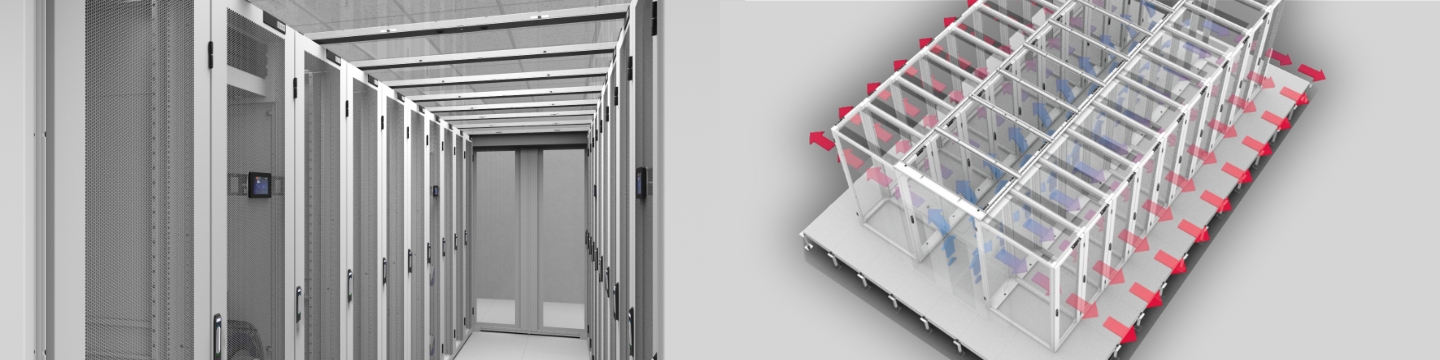
Implementing these airflow management measures not only reduces costs and energy consumption but also enhances the sustainability and reliability of data centers. From maintaining consistent cold aisle temperatures to improving return air temperatures, these measures offer a comprehensive solution for achieving energy-efficient data center operations.
Benefits include:
- Maintaining more consistent cold aisle temperatures.
- Potential to raise cold aisle temperatures, reducing overall energy consumption.
- Higher return air temperatures by eliminating by-pass airflows, thereby maximizing cooling efficiency.
- Elimination of recirculation airflows to prevent hot spots.
Embracing Proactive Efficiency Measures
Optimizing data center efficiency through effective cabinet airflow management measures is imperative in the face of rising energy costs and environmental concerns. By putting the outlined strategies into action, data center operators can not only decrease energy consumption but also enhance sustainability and reliability. With regulatory pressures mounting, proactive measures are key to ensuring compliance and staying ahead in the ever-evolving landscape of data center management. As the industry moves towards a more sustainable future, investing in airflow management solutions is a crucial step towards achieving energy-efficient operations and minimizing environmental impact.
Selecting Efficient Airflow Management Solutions
Minkels, a brand of Legrand, is dedicated to developing data center infrastructure solutions that align with stringent industry standards. The market leading Nexpand cabinet stands out as the top choice for minimizing air loss and efficiently redirecting cool air precisely where it's needed. Proven through rigorous testing, Nexpand stands as the premier cabinet solution, uniquely capable of averting the recirculation of both hot and cold airflows. This directly translates to reduced energy consumption by IT equipment, ensuring consistent optimal operating temperatures while minimizing overall building cooling costs.
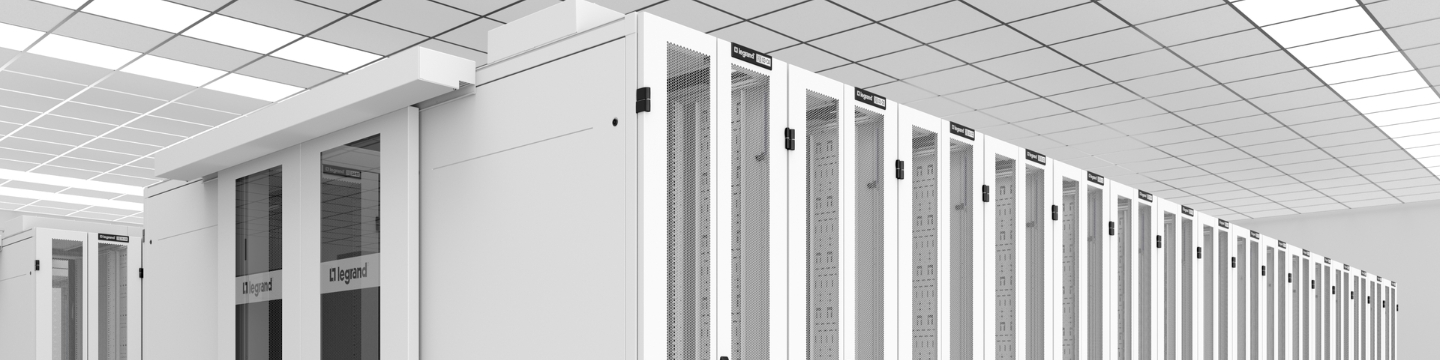
Designed with a focus on optimizing energy usage within data centers, Nexpand ensures that heat-generating IT equipment receives the most efficient cooling possible. The cabinets are designed to facilitate optimal airflow management, achieved through the utilization of airflow management packages and a diverse array of accessories. These features work in tandem to prevent air leakage and recirculation, thereby mitigating drastic temperature fluctuations. This not only enhances the reliability of IT equipment but also results in reduced energy requirements for data center operations, leading to significant cost savings.
Minkels new cabinet airflow management portfolio includes blanking plates, sealing between two or more adjacent cabinets, floor sealing solutions, energy-efficient gap-eliminating cabinet designs, and game-changing airtight cable entry seals. The result is a truly sealed cabinet package that, when housed in any hot or cold aisle containment design, provides data center owners and operators with the most comprehensive, cost-effective, and energy-efficient infrastructure solution currently available on the market.
Learn more by downloading our white paper: Reducing Data Center Costs and Environmental Impact by Deploying Six Effective Cabinet Airflow Management Measures.